
You have a way of winning business. The architecture that lets it scale hasn't been built yet.
That is why investments in marketing programs, sales hires, tools, and coaches don't deliver. There is nowhere for them to land.
For founder-led MSPs and professional service firms, $3M to $30M, where the next growth investment is the one that finally has to land.
Thirty minutes. By the end, you will know whether a diagnostic would help. These engagements typically run six to eight weeks.

You have a way of winning business. The architecture that lets it scale hasn't been built yet.
That is why investments in marketing programs, sales hires, tools, and coaches don't deliver. There is nowhere for them to land.
For founder-led MSPs and professional service firms, $3M to $30M, where the next growth investment is the one that finally has to land.
Thirty minutes. By the end, you will know whether a diagnostic would help. These engagements typically run six to eight weeks.
— if this sounds familiar
Three patterns. Most founders we work with recognize at least one.
01 ---------------- PATTERN ONE
"I am not afraid to invest in the business. I just cannot tell anymore whether the next investment will work or fail in the same way as the last one."
Real money goes in. Friction comes out.
You spent six figures on lead generation and have nothing to show for it. You paid for coaching that told the team things you had already told them. You hired a salesperson who looked perfect on paper, watched them ramp slowly, then watched them leave.
$500K+
The cost of one failed sales hire when you count compensation, the lost pipeline, and the discounting they did to close. Most founders have done it twice.
Each investment was reasonable. The sequence was not. The next decision is not whether to invest. It is how to know whether the next investment will produce a return or join the list.
02 ---------------- PATTERN TWO
"My P&L goes up and down with my energy levels. I know that is a problem. I do not know how to solve it without slowing down."
The business cannot grow without you in every deal.
You have hit the ceiling of your own calendar. Every time you try to step out of a deal, revenue drops or the client gets nervous. The team knows what you do. They cannot reproduce it.
The things you do intuitively are the things that make the business work. Nobody translated them into the form your team can actually carry forward. Until they exist outside your head, the only way to grow is to work more hours, and you are out of hours.
03 ---------------- PATTERN THREE
"Every consultant tells me to lay in the bed so they can cut off my legs to make sure the bed fits me."
Every consultant arrives with the same bed.
You have evaluated consultants, sales coaches, and process firms. Each one arrived with a methodology already shaped: pipeline stages from a sales book, qualification criteria from a SaaS company, a CRM build that fits a business you do not run. None of them spent enough time inside your firm to see how it actually wins.
You know structure would help. You also know the structure you have been offered would mean cutting away the parts of the business that make it different. So you keep running on instinct, even as instinct stops scaling.
— How the work begins
The diagnostic answers three questions.
Every engagement starts with the diagnostic. It typically takes six to eight weeks, depending on size and complexity. We interview you and your team, review what the business produces and what it sells, and build the picture of how it actually wins. At the end, you have answers to three questions most founders have never stopped to work out.
01
How does the business actually win today?
Most founders hate process because the processes offered to them reflect how someone else ran a different business. The first work of the diagnostic is to make visible the way your business wins, so that everything built from here stays true to what made the company grow in the first place.
02
Where is the business founder-dependent?
Every founder fills gaps the team cannot see. You qualify the deal a different way. You recognize what the client is really asking for. You sense when to push and when to wait. The team cannot reproduce that judgment because nobody has made it visible. When you try to step back, the business does not collapse because the team failed. It collapses because nothing was ever built to do the work your judgment was doing. We find the seams where your intuition is carrying the weight.
03
What needs to be true before the next investment will land?
A salesperson cannot succeed inside a system without qualification criteria. A CRM cannot work if the team does not know what to put in it. A marketing program cannot produce return without a way to handle the leads it generates. Each growth investment depends on prerequisites that were either built first or were not. The diagnostic ends with a ranked list of those prerequisites. What needs to exist in the business before the next hire, tool, or marketing program will produce a return rather than friction.
— METHODOLOGY
Five things we do, in the order they have to happen.
You have probably hired some version of growth help before. Coaches who worked on you. Trainers who worked on the team. Fractional CMOs and sales leaders who took over the existing motion. RevOps consultants who installed the system they had ready to install. None of it stuck the way you needed it to. The reason is that none of them did the work between the founder and the team. Field Line does that work. Here are the five moves, in the order they have to happen.
See how the business actually wins
Map the way money actually comes in today. Find the one thing that is keeping the next investment from working.
Surface what lives in the founder's head
The methodology that makes you successful is in your judgment, not in the business. We make it visible, then translate it into a form the team can carry forward.
Design the system that fits your business
Build the commercial structure from the methodology we surfaced. Not a template. A structure shaped by the actual way this firm wins.
Build the playbooks and systems the team will use
The playbooks, workflows, qualification criteria, and pipeline mechanics that let the system run. The team can operate inside this without you in every room.
Coach you and the team through the transition
Step you back from the work the system now handles. Develop the team's ability to operate the system without your judgment in every decision.
STEP ONE
See how the business actually wins
Map the way money actually comes in today. Find the one thing that is keeping the next investment from working.
STEP TWO
Surface what lives in the founder's head
The methodology that makes you successful is in your judgment, not in the business. We make it visible, then translate it into a form the team can carry forward.
STEP THREE
Design the system that fits your business
Build the commercial structure from the methodology we surfaced. Not a template. A structure shaped by the actual way this firm wins.
STEP FOUR
Build the playbooks and systems the team will use
The playbooks, workflows, qualification criteria, and pipeline mechanics that let the system run. The team can operate inside this without you in every room.
STEP FIVE
Coach you and the team through the transition
Step you back from the work the system now handles. Develop the team's ability to operate the system without your judgment in every decision.
One founder we worked with described the work this way before he knew Field Line existed:
“If someone could follow me around, listen to everything I say, shape it into questions, and build a structured offering from it, we would have something amazing.”
That is the work. Moves two, three, and four in his words.
You have already tried to assemble this from parts.
You have hired the salesperson before the qualification system existed. You have bought the CRM before the team knew what to put in it. You have launched the marketing campaign before you had a way to handle the leads. Each move was reasonable. Each one cost real money. None of them produced what you expected because the work that should have come first was never done.
The five moves above only work in this order. The salesperson cannot succeed inside a system that has not been designed. The system cannot be designed until the way you win is visible. The way you win cannot be made visible until the constraint that is gating the business is named. Skip a step and the next investment fails the same way the last one failed.
What other firms do, and what they leave out.
Coaches improve the founder. The team is still missing the system to run.
Trainers improve the team. There is still no system for them to execute against.
Fractional CMOs and sales leaders run what exists more efficiently. The architecture they are running was never built for this business.
RevOps consultants build the system they can deliver to many clients. The result fits a generic business, not yours.
Each one is doing real work. Each one leaves out the work between the founder and the team. The work between is what makes everything else stick.
— Built from real results
What has happened when this work gets done.
The numbers below come from a founder-led IT services firm where I built and applied this methodology over seven years. They represent what the full architecture can produce when both the diagnostic and the build phases are completed.
revenue
$10M → $25M
Growth over the engagement period
clients
52 → 108
Active clients without adding senior sales headcount
pricing
+30%
Premium sustained above comparable firms
win rate
65%
On qualified opportunities
Results vary by firm. Every engagement establishes a baseline before targets are set.
— Who is behind this
The work behind Field Line.
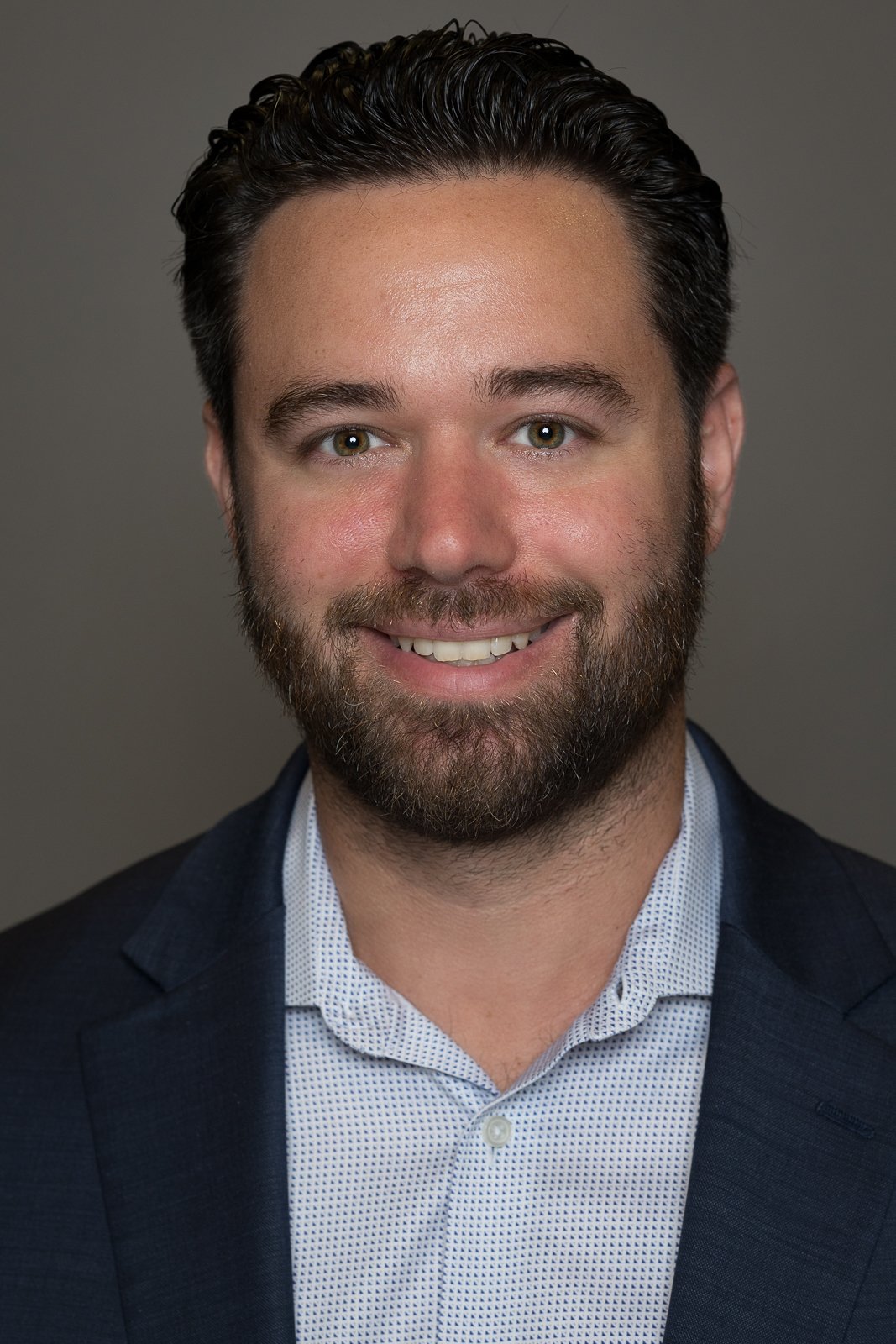
I spent seven years inside a founder-led IT services firm watching what made it work. The founder had a way of winning business that was unmistakable in the room and invisible everywhere else, a methodology that lived in his head as judgment, not in the business as architecture. Every salesperson who had been hired before me had been asked to operate inside a system nobody could see. I spent several years extracting the methodology and building the architecture around it. By the end, the founder was out of sales entirely and the system kept running.
That was the fourth growth system I had built from inside. The first was a business incubator inside a global nuclear engineering firm that produced $250M in revenue above the company's investment hurdle rate in its first two years and became the model for the global organization. The second was a cybersecurity business that came out of it, grown from $400K to $16M. The third was a boutique M&A advisory firm we built from concept to $3M in revenue within a couple of years. Field Line is what I built to do that work for other founders before they spend another year and another half million figuring it out the long way. The pattern repeats across firms in the $3M to $30M range. The founder's methodology is what makes the business successful. Until it is made visible and built into architecture, every investment downstream of it is solving the wrong problem well.
— fit
Who this is for, and who it is not for.
We work with a narrow set of founders. When the fit is right, the work produces results. When the fit is wrong, we say so in the first conversation.
This is for you if
You run a founder-led MSP, IT services firm, or professional service business, $3M to $30M in revenue
You are growing, but growth is carried by your personal judgment in every deal
You have tried hires, tools, or coaching that did not produce the return you expected
You want process that fits how the business actually wins, not a template
You are willing to let someone else make your way of working visible
This is not for you if
Your firm is under $3M, there is not yet enough system to diagnose
Your firm is well above $30M, you have a different kind of complexity that requires different work
You are looking for motivation or accountability work focused on the founder, not the system
You want to make the firm look like every other firm in the category, we build from what makes yours different
You are not ready to examine how the business actually wins
— current research
The MSP Growth Decision Study.
Field Line is in the middle of a structured research project on growth investment decisions in founder-led MSPs and service firms. Five questions, twenty-minute conversations, a hundred founders. The questions surface the conditions that separate growth investments that work from growth investments that fail.
Participants get the findings. The founders we have spoken with so far have told us the conversation itself was useful. Most found a question they had not asked themselves clearly before.
If you have made a meaningful growth investment in the last two years and want to participate, the conversation takes thirty minutes and we share the findings when the study completes.
— frequently asked questions
Questions founders ask before the first conversation.
Build the system before you make the investment.
If the patterns on this page felt familiar, the next step is a thirty-minute conversation. We will tell you whether a diagnostic would help, and what you could learn from the conversation itself even if it would not.